
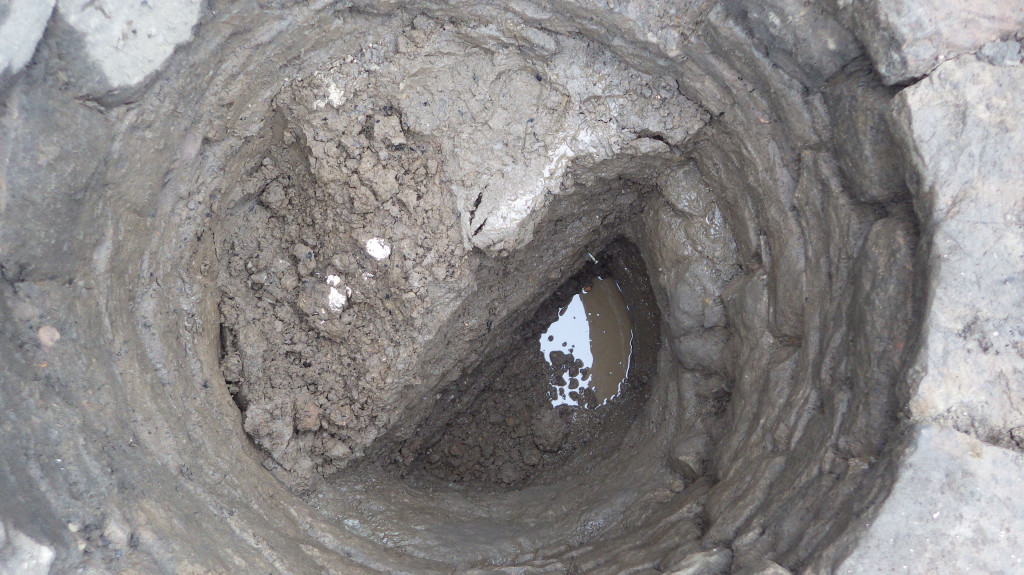

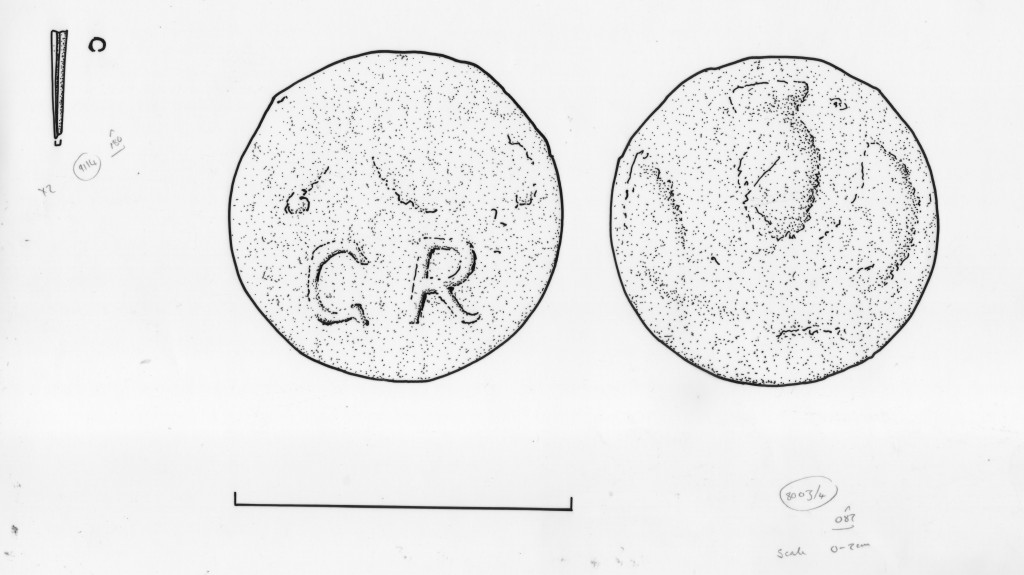
We undertook the archaeological excavation at the site of Panmure House, Canongate, Edinburgh, for the Edinburgh Business School, in advance of renovation and alteration of the existing 1690s building. The excavations revealed substantial medieval and post-medieval structures and strata in four broad phases. The earliest archaeology consists of features and deposits predating the construction of Panmure House, and comprises 13th to 16th century remains, including midden and garden soil deposits and interrelated, often intercutting pit features, many clay-lined, as well as early burgage-plot boundary features. Well-stratified faunal, shell, metal and ceramic assemblages were recovered from these features. The second phase consists of the construction of Panmure House itself in 1690, involving the restructuring of spatial organisation in the area, and the installation of a stone-lined well, preserved to at least 7m in depth. The third phase relates to the later use of Panmure House and include the installation of the stair-tower in the re-entrant of the L-plan House; the partial remains of outlying stone-built structures on the southern margins of the site; and multiple features associated with the change of use of the site to a foundry in 1838. The most recent phase consists of the mid-20th century alterations.


Old College Quad
Prior to the redevelopment of the University of Edinburgh’s Old College Quad, we were commissioned to investigate the potential for archaeological remains across the site.
Find out more →