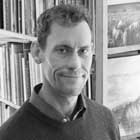
Philip Karsgaard
Philip Karsgaard is the team leader and project manager for the Archaeology division of Simpson & Brown, one of Britain's leading archaeological companies concerned with historic building survey, recording and analysis in support of architectural conservation as well as providing consultancy services for clients managing a wide range of historic environment assets, from landscapes to single sties and historic structures. Philip leads on landscape data analysis and background archaeological and historical analysis, and provides heritage advice and support for heritage assessment documents.
Philip studied Ancient Civilisations of the Mediterranean and Middle East at Edinburgh University, with a particular interest in the area of greater Mesopotamia and the Gulf. He has extensive fieldwork and supervisory experience at sites in Jordan, Syria, Turkey, Iraq and Cyprus. He also has experience working for the Cultural Resource Management teams of the US Department of Agriculture in Oregon, conducting surveys in a range of environments for inclusions in federal site management systems.
Philip acted as field director for the Gharandal Archaeological Project, Jordan, which investigated a Justinian triple-apsed cathedral, its Nabatean temple precursor and later post-mediaeval transformations after the Islamic Conquest. Philip has investigated settlement and mortuary sites at Pella, Tabaqat Fahl, Jordan (Bronze Age to Byzantine temple precincts and Bronze Age fortifications on Tell Husn); at Teleilat Ghassul, the Chalcolithic settlement on the banks of the Dead Sea; and at Tell Gharandal in southern Jordan. He joined the University of Edinburgh team at Tell Jerablus Tahtani, Syria, exposing the earliest remains at the site as well as its massive 3rd millennium fortification walls. At Tell Brak, Syria, he worked with the University of Cambridge research team on the early remains on the main mound. With Jason Ur of Harvard University he co-directed the Tell Brak Surburban Survey. This work examined the outer mounded landscape of the Tell Brak complex. In the course of this work, an outer mound was identified as a principally mortuary mound, containing the greatest concentration of human remains from the 4th millennium BC discovered in Greater Mesopotamia. The survey, its methodology and results were published in Science and Antiquity in 2007. Philip was also a team member for the Tell Brak Sustaining Area survey which catalogued and studied settlements and their environment in a 20km radius around the site.
He co-directed a fieldschool and excavation project at Souskiou-Laona, Cyrpus, with the University of Edinburgh. This project examined a partially looted cemetery site on a limestone outcrop near the village of Souskiou, including the survey and excavation of looters’ spoil mounds.Since 2000, Philip has been engaged in commercial and infrastructure archaeology in the UK, supervising and managing projects in the commercial sector. This includes archaeological consultancy in landscape assessments and multi-site historic environment surveys for national institutional stakeholders such as the National Trust. Philip’s experience also includes multiple research, excavation, and public engagement projects, often in urban settings. He has conducted a variety of projects within the World Heritage sites of the Edinburgh Old and New Towns, including the first major examination of the great Edinburgh “Earthen Mound” at the heart of the World Heritage site, recently published by Archaeology Scotland. Interventions in the Edinburgh World Heritage site also include the excavation and analysis of Panmure House, Canongate, and sites in the Grassmarket. Recently, Philip has managed and directed a major landscape study for the National Trust in Northern Ireland, assessing the historic landscape and its significance for major new land acquisitions on the urban fringes of Belfast. This survey advised the National Trust as to its land management choices in the light of the historic environment, and identified new sites including mortuary mound cairn fields and other monuments.


Previous experience at Tell Brak, Syria, Suburban Survey mapping with areas surveyed and assessed by Philip Karsgaard of Simpson & Brown/Addyman Archaeology.

Recording of the deposits in Edinburgh’s Mound at the heart of the Edinburgh Old and New Town World Heritage Site by Philip Karsgaard of Simpson & Brown/Addyman Archaeology.
Philip has extensive and detailed experience of excavation, research and assessment including the middle east;
- Extensive fieldwork and supervisory experience at sites in Jordan, Syria, Turkey, Iraq and Cyprus.
- Settlement and burial mounds at Pella in Jordan; Bronze Age to Byzantine temple precincts and Bronze - Age fortifications on Tell Husn.
- Teleilat Ghassul, the Chalcolithic settlement on the banks of the Dead Sea; and at Tell Gharandal in southern Jordan.
- Tell Jerablus Tahtani, working on the burial mound and exposure of the earliest remains at the site as well as its massive 3rd millennium fortification walls.
- Tell Brak, Syria; working on the on the remains of the main burial mound.
- Co-direction of the Tell Brak Surburban Survey. This work examined the outer burial mounds of the Tell Brak complex.
- Co-direction of a fieldschool and excavation project at Souskiou-Laona; a partially looted cemetery site on a limestone outcrop near the village of Souskiou, including the survey and excavation of looters’ spoil mounds.